

Failure to Appear Lawyer in Toronto
Pyzer Criminal Lawyers is a Toronto criminal defence law firm that represents clients charged with failure to appear in court across the Greater Toronto Area. If you missed a court date, have an outstanding bench warrant, or are facing charges under Section 145 of the Criminal Code of Canada, our experienced criminal lawyers will help you understand your options and work toward resolving the matter.
Charged under Section 145? Facing a bench warrant? Pyzer Criminal Lawyers provides experienced criminal defence representation across Toronto and the Greater Toronto Area.
- Pyzer Criminal Lawyers
- Est. 2002
- Available 24/7





What Is Failure to Appear?
Failure to appear in court is a criminal offence under Section 145 of the Criminal Code of Canada. A person commits this offence when they fail to attend court as required by a summons, appearance notice, undertaking, release order, or recognizance. It also applies when they fail to attend for fingerprinting under the Identification of Criminals Act. This charge may be laid in addition to whatever original charges the accused was already facing.
Section 145 address different forms of alleged non-compliance. These can include failing to attend court as required and failing to attend for fingerprinting. Alleged breaches of release documents may also fall under Section 145, depending on the specific allegation and the wording of the condition. Your lawyer will determine which subsection of Section 145 applies to your facts.
Failure to appear is a hybrid offence. The Crown attorney gets to choose whether to proceed summarily or by indictment, depending on the facts.
One thing to understand is that the Crown must still prove the required fault element. In many cases, that means proving beyond a reasonable doubt that you knew you were required to attend, or were reckless about that risk, and failed to do so without lawful excuse. Courts have recognized that an honest but mistaken belief about the date of a required appearance may prevent a conviction, depending on the facts. That distinction matters. It can form the basis of a strong defence in the right case.
Bench Warrant vs. Discretionary Bench Warrant
When someone misses a court date, the presiding judge or justice of the peace will go one of two directions.
A bench warrant is a formal order authorizing police to arrest the accused and bring them before the court. Once issued, they may appear in police databases and can surface during police interactions, including traffic stops and other enforcement encounters. Police can execute it at any time, including at your home or workplace.
A discretionary bench warrant (DBW) is different. The court adjourns the matter to a new date without ordering an immediate arrest. If you show up on the rescheduled date, the warrant gets cancelled. Miss the rescheduled date, though, and the court will almost certainly issue a full bench warrant.
The type of warrant you get depends on the seriousness of the original charges, your history of court attendance, and whether a criminal defence lawyer was able to appear and explain why you were absent.
What a Lawyer Can Do
A criminal lawyer can check whether you have any outstanding warrants, advocate for a discretionary bench warrant instead of a full warrant, or arrange a planned and controlled surrender if a warrant is already active.
Penalties for Failing to Attend Court in Ontario
Failure to appear carries the following maximum penalties.
By indictment, up to two years imprisonment. By summary conviction, up to two years less a day and/or a $5,000 fine. There are no mandatory minimum penalties. Sentencing depends on the facts of each case, and available dispositions include a discharge, suspended sentence, fine, custody, probation, or a conditional sentence.
How a Failure to Appear Charge Can Affect Your Case
The direct penalties are one thing. But a failure to attend court creates problems beyond the sentence itself.
A conviction under s.145 results in a criminal record. That affects employment, international travel, and immigration status. Your existing bail on the original charges could be revoked, with the Crown attorney pushing for stricter conditions or opposing bail at a new hearing. A missed court appearance also changes how the prosecution handles your underlying case, because courts tend to view it as disregard for judicial authority. And if you face bail hearings in the future on unrelated matters, a failure-to-appear conviction weighs against release.
Defences for Failure to Appear Charges
Being charged with failing to appear in court does not mean a conviction is automatic. Several defences apply depending on the facts.
Lawful excuse. If you were hospitalized, in custody on another matter, or faced a situation that made it impossible to attend court, this qualifies as a lawful excuse. The burden falls on you to demonstrate this on a balance of probabilities. Courts do not accept work obligations or forgetting the date.
Lack of mens rea. As explained in the definition section above, the Crown has to prove you knew about the court date and chose not to attend. If you held an honest but mistaken belief about the date, you lack the intent required for conviction.
Improper service or notice. If you were never properly served with the appearance notice, summons, or other document requiring your attendance, that forms the basis of a defence.
Charter violations. If your rights under the Canadian Charter of Rights and Freedoms were violated during your arrest or detention following the failure to appear, your lawyer can bring a Charter application.
Negotiation with the Crown. Even when a complete defence is not available, an experienced criminal lawyer can negotiate with the Crown attorney to have the charge withdrawn. This works best in situations involving a first offence, a voluntary surrender, and no harm caused by the absence.
Pyzer Criminal Lawyers will review your case and identify the strongest available defence. Call (416) 658-1818 to discuss your situation.
How Pyzer Criminal Lawyers Resolves Failure to Appear and Bench Warrant Cases
When a client comes to us after missing a court date or finding out about an outstanding bench warrant, we move quickly.
Warrant Status Verification. We contact the courthouse to find out whether a bench warrant or a discretionary bench warrant has been issued and confirm the current status of your original charges.
Defense Strategy Assessment. We review the facts of your missed court appearance and evaluate the strength of your position on both the failure to appear charge and the underlying case.
Planned Surrender or Court Appearance. If a warrant is active, we arrange a controlled voluntary surrender to minimize time in custody. We attend court with you, advocate for the warrant to be rescinded, and push for your release on the least restrictive bail conditions available.
Charge Resolution and Record Protection. We negotiate with the Crown attorney to pursue the best available outcome. That could mean having the failure to appear charge withdrawn, seeking a discharge to protect your criminal record, or resolving the matter in a way that limits the impact on your original charges.
Failure to Appear in Toronto. What to Expect at GTA Courthouses
Pyzer Criminal Lawyers regularly appears at courthouses across Toronto and the Greater Toronto Area, where failure to attend court matters are heard, including:
Old City Hall, 60 Queen Street West, Toronto. College Park, 444 Yonge Street, Toronto (bail court). 1911 Eglinton Avenue East, Scarborough. 2201 Finch Avenue West, North York. A. Grenville and William Davis Courthouse, Brampton. Newmarket Courthouse, Newmarket. Oshawa Courthouse, Oshawa.
If you are surrendering on a bench warrant in Toronto, the process involves being processed at a police division and then transported to the courthouse for a bail hearing. That hearing happens within 24 hours. If the warrant was issued by a court outside Toronto, you can still be arrested in Toronto and transported, or connected by video, to the issuing court.
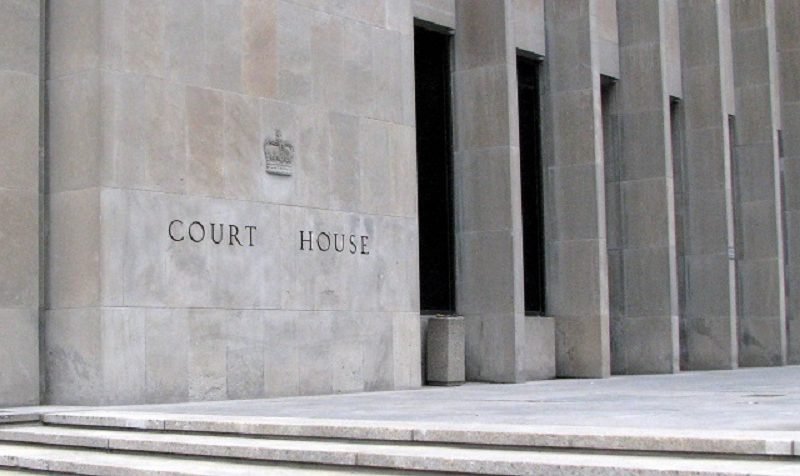
Missed Your Court Date? Here Is What to Do Next
The first few days after missing your date are when the most important decisions get made. What you do right now matters more than what happened.
Do not assume you should go to the courthouse on your own before getting legal advice. If a bench warrant has been issued, walking into court without a lawyer could lead to an immediate arrest and detention until a bail hearing.
Call a criminal defence lawyer right away. A lawyer will find out whether a warrant has been issued, tell you exactly what you are dealing with, and start preparing on your behalf.
Do not talk to the police about the missed court date without legal counsel present. The Crown can use anything you say in proceedings against you.
There is a short window after a bench warrant gets issued, usually one to three days, where a lawyer can go to the courthouse and have the warrant cancelled before it hits the broader police database. Once that window closes, police must execute the warrant by making an arrest and processing. Very different situation.
What to Expect When You Contact Our Toronto Criminal Defence Firm
Here is how the process works at Pyzer Criminal Lawyers.
Free Confidential Case Evaluation. You contact our office and speak with a member of our legal team. This initial consultation is free, confidential, and carries no obligation. Communications seeking legal advice are treated confidentially.
Case Review and Strategy. Once you retain our firm, we go through all the disclosure from the Crown. Digital evidence, witness statements, police reports. From there, we build a defence strategy tailored to your circumstances.
Pre-Trial Proceedings. These cases involve significant pre-trial work. Bail hearings, disclosure requests, Charter applications, negotiations with the Crown. All handled.
Trial or Resolution. We pursue the strongest available path. That could mean a trial and challenging the Crown’s evidence before a judge. Or it could mean negotiating a favourable resolution, like withdrawn charges or a peace bond. Your call, guided by our honest assessment.
Frequently Asked Questions About Failure to Appear Charges in Toronto
It depends on the facts. Your criminal history, the seriousness of the original charges, and whether you have a criminal defence lawyer all play a role. Many failure to appear charges are resolved without a custodial sentence, especially when the accused has no prior record and surrenders voluntarily with the help of a lawyer.
Not necessarily. The Crown has to prove you knew about the date and chose not to attend. An honest mistake about the date can be a valid defence. A criminal defence lawyer will assess whether this applies to your situation.
If the bench warrant was issued in the last one to two days, your lawyer can often have it cancelled at the courthouse before it enters the police database. After that window closes, your lawyer can bring a motion to quash the warrant. Act fast.
A bench warrant authorizes police to arrest you immediately. A discretionary bench warrant gives you a new date. Show up on that date, and the warrant is cancelled. Miss it, and the court will issue a full bench warrant.
Surrendering voluntarily with a criminal defence lawyer is almost always the better approach. A planned surrender shows cooperation with the court. It gives your lawyer time to prepare a bail plan. And it tends to lead to a more favourable outcome at the bail hearing compared to an unplanned arrest.
Missing court can result in your bail being revoked. You face a new bail hearing on both the original charges and the failure to appear charge. The Crown attorney will argue that you present a flight risk. The bar for securing release gets higher than it was at your original bail hearing.
Outstanding warrants do not expire in Ontario. They stay in the police database indefinitely and get flagged during any police interaction, including traffic stops and border crossings. Resolving an outstanding warrant with the help of a lawyer is a better approach than risking an unexpected arrest.
In some situations, yes. A lawyer can sign a designation of counsel and attend on your behalf for certain administrative appearances. The court still requires your personal attendance at specific stages. Your lawyer will tell you when you need to be there.